Free educator guide
Helping Children Talk About Feelings
- Educator guide for ages 5–8
- About 45 minutes, or several shorter sessions
- 4-page PDF · US Letter
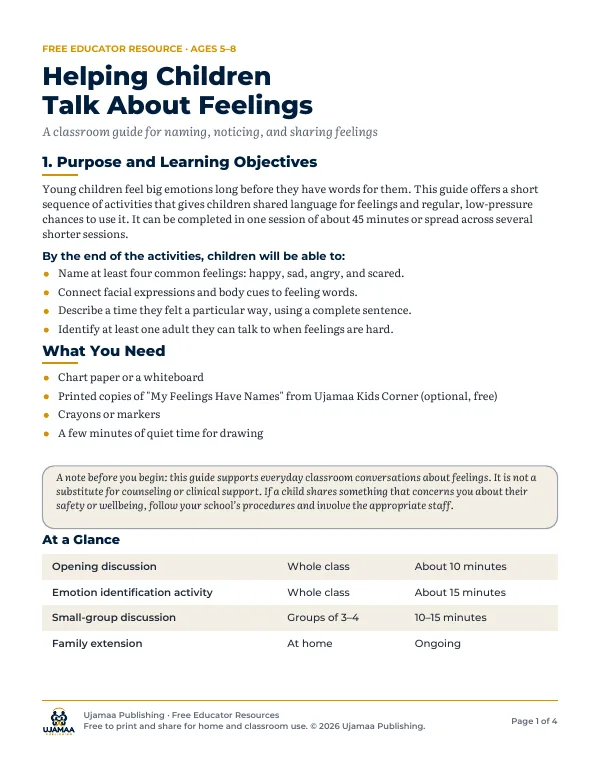
Young children often feel big emotions before they have the words for them. This free guide gives teachers a short, ready-to-use sequence for building a shared feelings vocabulary in the classroom: a modeled opening discussion, a face-reading activity, small-group conversation prompts, and a simple way to bring families into the conversation.
Learning objectives
By the end of the activities, children will be able to:
- Name at least four common feelings: happy, sad, angry, and scared
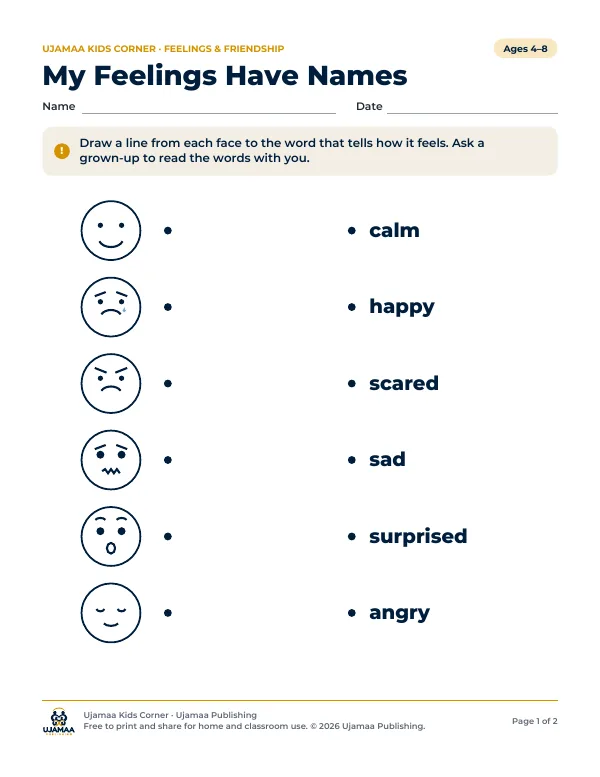
- Connect facial expressions and body cues to feeling words
- Describe a time they felt a particular way, using a complete sentence
- Identify at least one adult they can talk to when feelings are hard
Inside the guide
- Purpose and learning objectives
- Opening classroom discussion
- Emotion identification activity
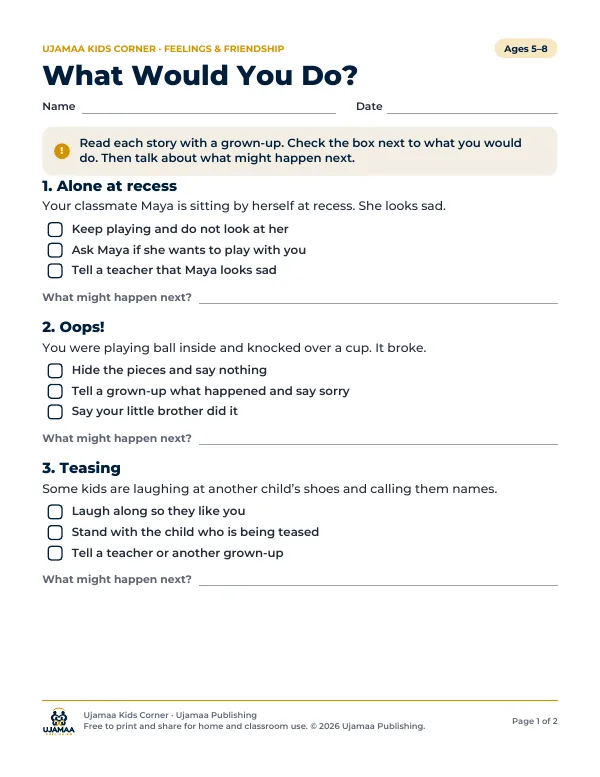
- Small-group discussion prompts
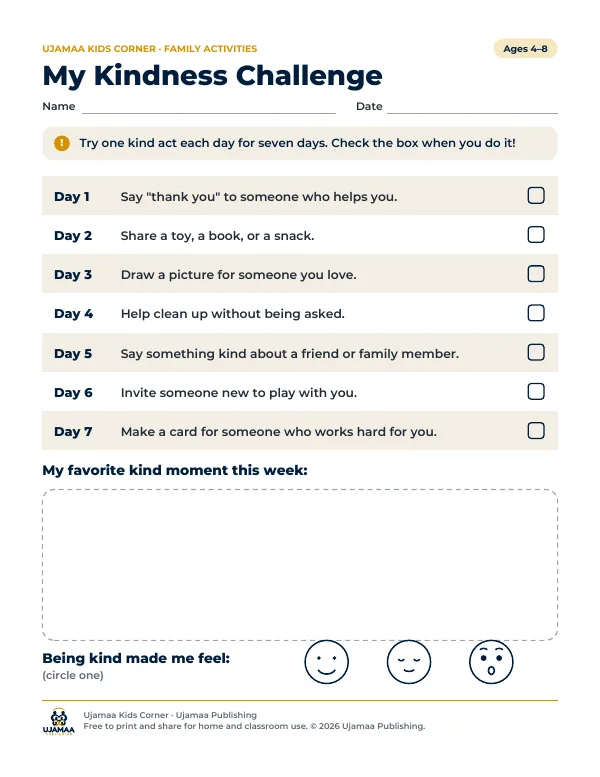
- Family extension activity
- Adapting participation for different learners
How to use it
- Download and print the guide (four pages, US Letter).
- Optional: print copies of the free “My Feelings Have Names” activity for each child.
- Lead the opening discussion, modeling a feeling of your own first.
- Run the emotion identification activity and the “Show Me” game.
- Break into small groups with the discussion prompts, then share strategies as a class.
- Send home the family note from page three.
This guide supports everyday classroom conversations about feelings. It is not a clinical resource and makes no curriculum-alignment claims.